Living abroad means running a life in a language you don't speak yet: the landlord, the market, the clinic. A dictionary gives you a word, but not when to use it. KataMata is for expats picking up the everyday language of the country they live in, one useful word at a time.
What it does
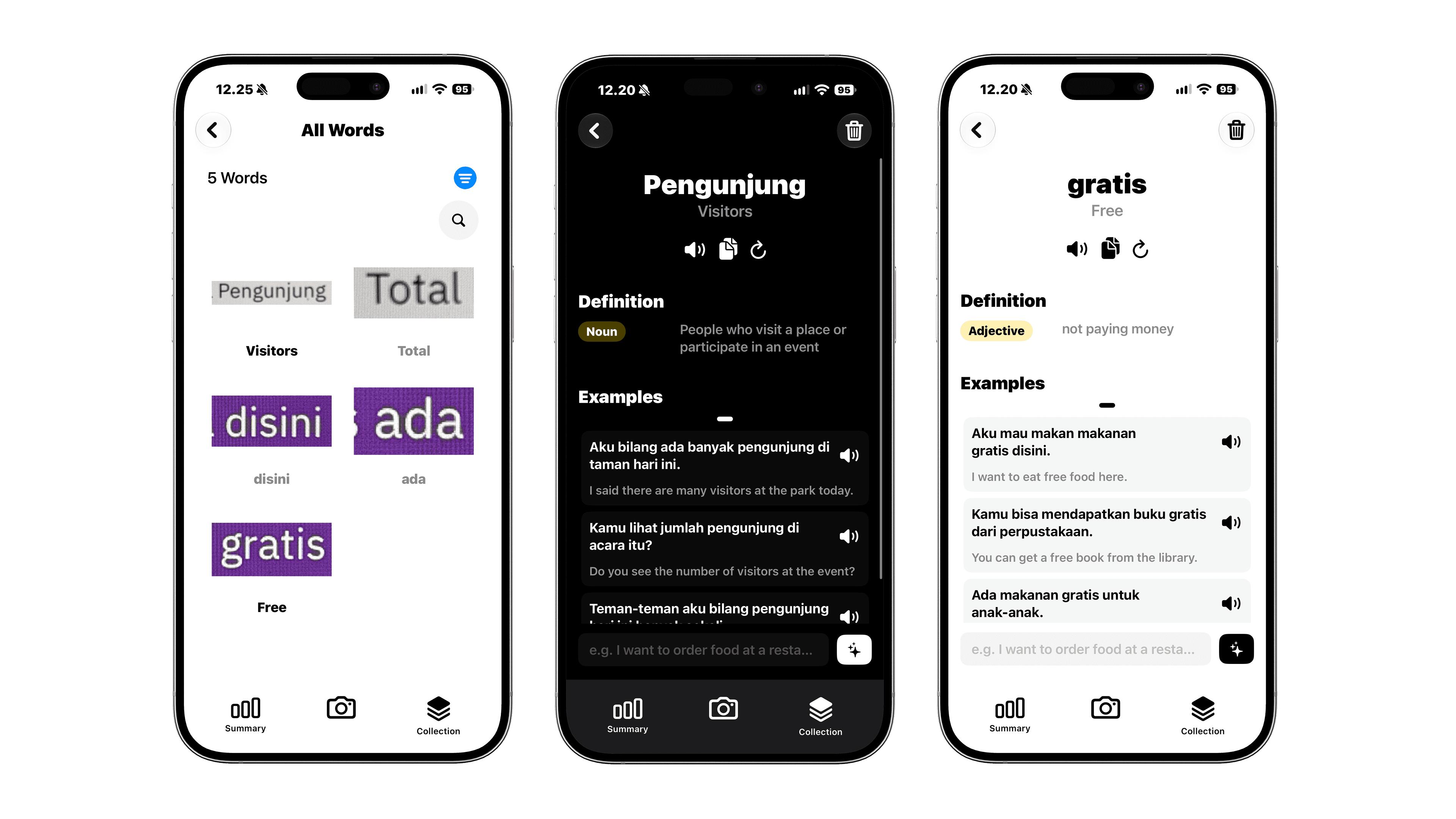
Collect words
Save the words you run into in daily life, building a collection that's yours.Translate and explain
Each word comes with a translation and a plain explanation of what it means.See it in use
An example of how the word is used, so it's ready for the next real conversation.How it's built
A SwiftUI app. The explanations and examples are generated with Apple's Foundation Models framework, so the language help comes from the model built into the device.
A word
Collected from daily life.
Prompt
Written for this one use: an expat learning everyday words.
Structured output
Translation, explanation, and example as fields, not free text.
Check or fall back
If the result doesn't fit, a fallback instead of a bad card.
My role
I was the iOS applied AI engineer on a team of six, at the Apple Developer Academy from May to June 2026. I built the AI side: the prompts, the structured output the app reads, and the fallbacks for when the model's answer doesn't fit. All of it had one job: make sure what the model gives back matches what an expat actually needs.
What surprised me
The model on the device has real limits, and it isn't instant. Both shaped the design more than I expected: the prompts had to stay focused, and the app had to handle the wait and the misses gracefully instead of assuming every answer would be fast and right.